Managing industrial debris containment requires strict adherence to physical staging requirements and haul capacities. A 40-yard dumpster rental functions as the primary containment hub for large-scale demolition,…
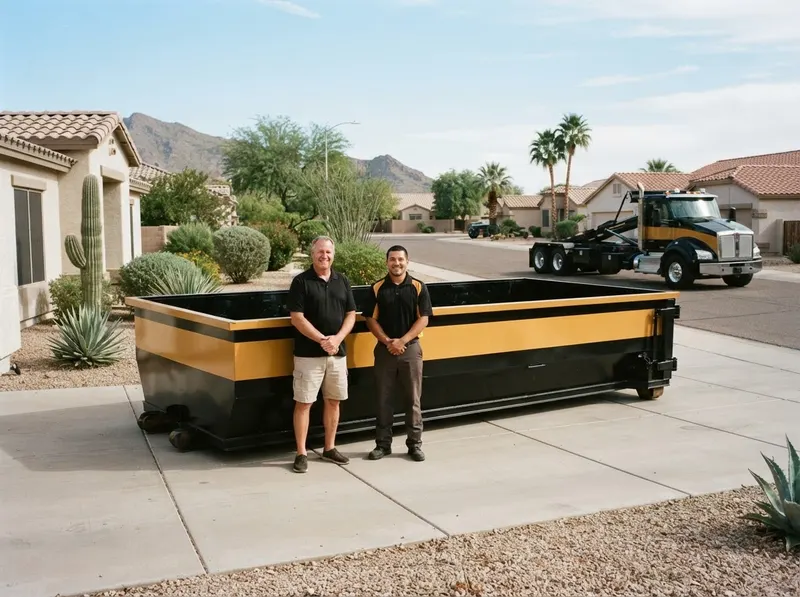
Managing industrial debris containment requires strict adherence to physical staging requirements and haul capacities. A 40-yard dumpster rental functions as the primary containment hub for large-scale demolition, commercial tenant improvements, and structural alterations where debris accumulation threatens job site flow. In contrast to smaller roll-off units, the 8-foot sidewalls of a 40-yard container eliminate the hazards of uncontained overflow, which frequently triggers municipal notices or neighborhood association penalties in areas like Paradise Valley Village, Arcadia, and Desert Ridge. Operating guidelines outlined by the OSHA Construction Standards mandate clear perimeter management around refuse drops, making continuous containment inside high-wall roll-offs an essential safety practice for framing and framing demolition crews.
Material density determines equipment suitability on Phoenix projects. High-volume, low-density debris, such as carpet, insulation, retail fixtures, roofing felt, and structural lumber, is ideal for a 40-yard box. Dense aggregates such as foundation concrete, subbase caliche, brick, and heavy sand should not be loaded into an 8-foot container due to transport weight limits governed by the Arizona Department of Transportation Commercial Vehicle Services. If a project involves heavy masonry or complete concrete slab extractions, staging smaller boxes prevents over-tonnage transport rejections. Environmental containment also remains non-negotiable under municipal guidelines administered through the City of Phoenix Public Works Department, requiring dry, non-toxic commercial refuse free from prohibited liquids, oil, and wet chemical compounds.
Staging infrastructure for an 8-foot-tall, 22-foot-long container requires 60 feet of straight-line clearance for the transport vehicle to deploy the roll-off rails. Property managers and general contractors working in tight urban corridors like Encanto Village, Biltmore Area, and North Central Phoenix must account for low-hanging mesquite canopies, low-voltage overhead service drops, and alleyway radius constraints. According to urban equipment standards supported by the American Public Works Association, roll-off placement must maintain unobstructed storm drains and right-of-way sightlines. Direct placement on residential concrete or commercial asphalt driveways requires stabilizing hardwood run-boards beneath steel wheels to safeguard surface structural integrity.
Rigid waste management planning ensures compliance with diversion frameworks supported by the EPA Construction and Demolition Debris Guide and regional air conservation criteria set by the Maricopa County Air Quality Department. Dust abatement during dry desert months requires keeping loose drywall dust and insulation wetting supplies nearby. Oakline Container Group maintains flat, upfront pricing on every container, removing the ambiguity of variable tonnage charges and transport add-ons so project managers in Maryvale, South Mountain Village, and Ahwatukee Foothills can execute demolition and clearout phases on accurate, predictable budgets.
Every job gets a firm, written price after a free on-site visit.
For standards, safe disposal, and service guidance on DUMPSTER in Phoenix, AZ, useful references include U.S. EPA, EPA, EPA, OSHA, Earth911, and Google Maps. General consumer and small-business resources are available from USA.gov, Better Business Bureau, FTC Consumer Advice, U.S. Small Business Administration, and Ready.gov.
Tell us about your 40-yard dumpster rental job in Phoenix and we'll send a clear, written quote, usually the same day.
 Oakline Container Group